




For as long as markets have existed, the lone analyst has been a romanticized figure—a deep thinker, poring over reports and financial statements, relying on intuition and experience to spot the winning investment. While this image captures the value of human judgment, it increasingly fails to reflect the reality of modern financial research. The sheer volume of data, the speed of information flow, and the complexity of global markets have made the solo pursuit of insight a near-impossible task. The future of superior research does not lie in pitting human against machine, but in forging a powerful partnership between the two. This is the era of the human-analyst hybrid, where a Market Data AI Agent becomes an indispensable collaborator, amplifying human curiosity and expertise to achieve research outcomes neither could accomplish alone. Pioneering platforms like graph.swiss are building the blueprint for this collaboration, showing us how to combine the best of human intuition with the best of machine intelligence.
The Distinct Gifts Of Human And Machine
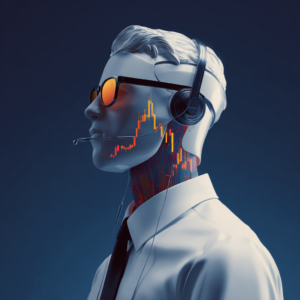 To understand the power of the hybrid model, we must first appreciate the unique strengths each party brings to the table. The human analyst possesses qualities that remain irreducibly important: intuition, creativity, contextual understanding, and ethical judgment. A human can sense when a story doesn’t add up, can draw on years of experience to assess a management team’s credibility, and can weigh qualitative factors like corporate culture or brand reputation. These are not skills that can be easily coded.
The Market Data AI Agent, on the other hand, brings gifts of a different order: superhuman speed, limitless scalability, and perfect recall. It can read millions of documents in minutes, identify patterns invisible to the human eye, and monitor thousands of data sources simultaneously without ever tiring. It has no cognitive biases, no bad days, and no blind spots. It is the ultimate research assistant, capable of handling the heavy lifting of data processing so the human analyst can focus on what they do best: thinking, questioning, and deciding.
From Hypothesis To Discovery, Accelerated
The traditional research process often begins with a hypothesis. An analyst might suspect a sector is poised for growth or that a company is undervalued. They then begin the laborious process of gathering evidence to support or refute that hypothesis—a process that can take days or weeks of manual digging.
In the human-analyst hybrid model, this process is radically accelerated and enhanced. The analyst can pose their hypothesis to the AI agent, which then acts as a tireless investigative partner. “I’m interested in Swiss medtech companies that might be undervalued. Can you scan for firms with strong patent activity, recent hires of top scientific talent from universities, and low price-to-earnings ratios compared to their peers?” The AI agent can execute this complex, multi-faceted query in seconds, returning a curated list of candidates complete with supporting data and network maps of key researchers.
This doesn’t replace the analyst’s judgment; it supercharges it. The analyst can then dive deeper into the AI’s findings, applying their human expertise to assess the quality of the patents, the reputation of the newly hired scientists, and the nuances of the competitive landscape. The hypothesis is tested and refined at unprecedented speed, allowing the analyst to cover more ground and arrive at better-informed conclusions faster than ever before.
Exploring The Unknown With AI-Powered Serendipity
One of the most exciting aspects of the human-analyst hybrid is its potential to foster discovery and serendipity. Human researchers often suffer from confirmation bias—the tendency to seek out information that confirms their existing beliefs. An AI agent, lacking such bias, can surface unexpected connections and challenge assumptions.
Imagine an analyst researching a seemingly stable industrial company. While gathering data, the AI agent might flag an unusual pattern: three mid-level executives from a completely different, high-growth tech startup have recently joined the company’s board of advisors. This detail, buried in professional network data, might seem irrelevant to a human focused on financial metrics. But the AI, with its unbiased view, presents it as a point of interest. The analyst, using their human curiosity, investigates further and discovers the company is quietly building an internal AI division, led by these new advisors. This unforeseen insight—uncovered through the collaboration of machine pattern-recognition and human curiosity—could reveal a major strategic pivot and a significant investment opportunity that traditional analysis would have missed. The AI agent becomes a source of intelligent serendipity, guiding the human toward discoveries they would never have found on their own.
Enhancing, Not Replacing, Professional Judgment
A common concern about the rise of AI in research is that it will devalue or eventually replace human analysts. The hybrid model offers a far more positive and empowering vision. The AI agent does not replace judgment; it demands more of it. As the machine handles the routine collection and synthesis of information, the analyst’s role evolves from data-gatherer to insight-interpreter and strategic decision-maker.
The questions shift from “What are the numbers?” to “What do these numbers really mean?” and “What story is the data telling us?” The analyst spends less time buried in spreadsheets and more time thinking critically about the implications of the AI’s findings. They assess the quality of the underlying data, consider the competitive dynamics the AI has identified, and apply their understanding of human behavior to evaluate management teams and market sentiment. The AI provides the raw material and the initial cut; the human provides the polish, the context, and the final, informed judgment. This elevates the entire research function, making it more strategic, more insightful, and ultimately more valuable to the investment process.
A Partnership For A Smarter Future
The future of financial research is not a choice between human and machine. It is a partnership. By embracing the human-analyst hybrid model, firms can unlock a new level of analytical power and insight. The Market Data AI Agent handles the vast, the complex, and the tedious, while the human analyst focuses on the strategic, the nuanced, and the creative. Together, they form a team that is faster, smarter, and more perceptive than either could be alone. This collaboration doesn’t diminish the role of the analyst; it elevates it, transforming research from a process of gathering information into a true pursuit of understanding. In this new era, the most successful researchers will be those who learn to work not in competition with AI, but in powerful, positive collaboration with it.
